Cities
Quito
The capital of Ecuador, rises to an altitude of 2,850 m in the foothills of the Andes. Built on the foundations of an ancient Inca city, it is famous for its well-preserved colonial center with many 16th and 17th century churches and other structures that combine European, Moorish and indigenous styles. In particular, there is the cathedral on Plaza Grande and the Church of the Company, a richly decorated Jesuit religious building.
Guayaquil
Is a port city in Ecuador, known as an access point to the beaches of the Pacific and the Galapagos Islands. On the Simon Bolívar promenade, which runs along the Rio Guayas, stands the monument of La Rotonda. In the north, the district of Las Peña is full of colorful houses. Stairs lined with cafes and art galleries lead to the Santa Ana hill, which features a lighthouse and the chapel of Santa Ana, and offers views of the city.
The Galapagos Islands
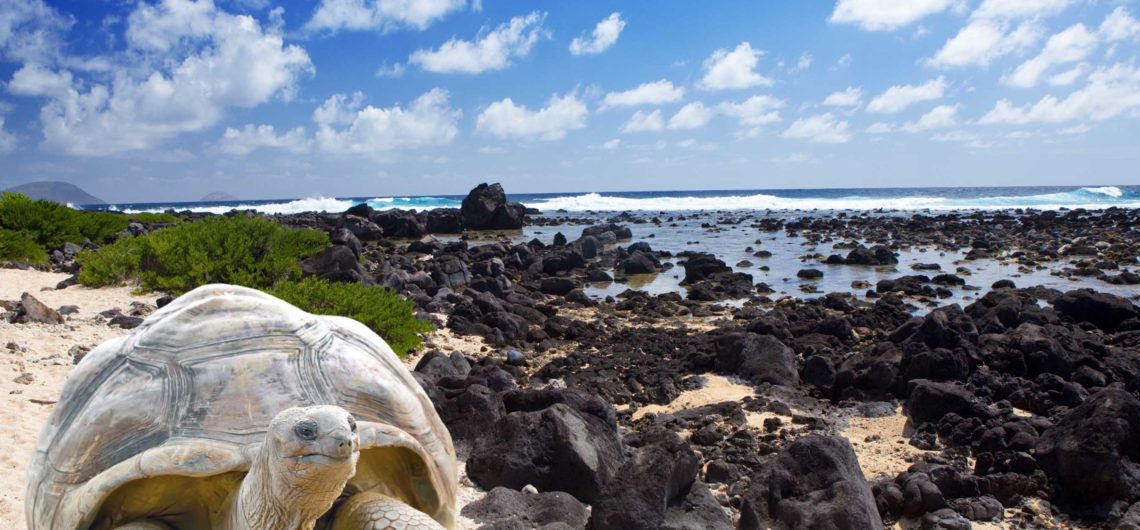
Are a volcanic archipelago of the Pacific Ocean. They are considered one of the world’s major wildlife viewing destinations. Province of Ecuador, the archipelago lies nearly 1,000 km off its coast. Its isolated territory is home to a variety of flora and fauna, many of which are unique. Charles Darwin went there in 1835, and his observations on the Galapagos species.
Bartolome Island
Small half-moon shaped island facing Sullivan Bay, east of Santiago. Volcanic Island uninhabited, it is best known for its rock formations that come in different colors such as red, orange, green and black volcanic, the best known being Pinnacle Rock. To get there, you will enjoy a panga ride, a small boat, which will take you to the various beaches with its mangroves, ideal for swimming and diving.
Española Island (Hood Island)
In the southeast of the archipelago, Española Island is the furthest away, but it is the most interesting for bird watching: dovetail gulls, finches, lava herons, mocking birds, etc. Española Island is the only place in the world where Galápagos albatrosses breed.
Isabela Islands (Albemarle Island)
Isabela Islands, 130 km long and 82 km wide, is the largest island in the Galápagos with five volcanoes, some of which are partially active. Cerro Azul and Wolf are the two most imposing, rising to a height of about 1700 m. Arriving on the island, you will be admiring its beauty; trees with deep green leaves on black and torn rocks welcome us, the colorful village separated in two by its ocher road, very sparsely populated, its large white sand beach deploying swamp landscapes, cactuses and plants stunned by heat and drought and its volcanoes pointing to the sky…
Santa Cruz Island
Santa Cruz Island, in Spanish “Isla Santa Cruz”, also known by the English as “Indefatigable Island”. Santa Cruz is the most touristic island in the Galapagos and offers the most attractions. You will enjoy a stroll in the bustling harbor and watch the pelicans fishing. Do not miss Puerto Ayora and its Darwin International Station which is a famous center where scientist work on research and projects for conservation of the Galápagos terrestrial and marine ecosystems